

Read the full article here.
The Aug. 26 floods that originated on the Nepal-China border, and which knocked out around 10 per cent of installed power from the national grid, has prompted a debate on whether Nepal should rethink its overall strategy or just adopt better-engineered plants. Amid this, the flood could jeopardise the country’s clean energy targets and push it to adopt more solar power.
The flashflood crippled a combined installed generation capacity of 281 megawatts, including a solar power plant, and damaged four other under-construction projects, totalling a capacity of 700 MW. One of the oldest hydroelectric plants, the 14.1-MW Devighat Hydroelectric Plant, commissioned 42 years ago, was wiped out.
Further downstream, the flood badly damaged a 25-MW solar power plant, according to data compiled by Mongabay from official sources. Similarly, with a hub of a transmission line washed away on the Trishuli River’s banks, another 150 MW of power from different power plants is cut off from the national grid system.
Transmission lines, including a substation on the Trishuli riverbank, were also destroyed. While officials are assessing the damage, estimates put losses at hundreds of billions of Nepali rupees, according to media reports. They say they can’t yet provide timelines for when the affected projects will resume generation.
The flood exposed a clear pattern. The worst damage hit powerhouses built on the surface, and dams and desanders located on or near the riverbed. Newer plants with underground powerhouses and desanders held up comparatively well.
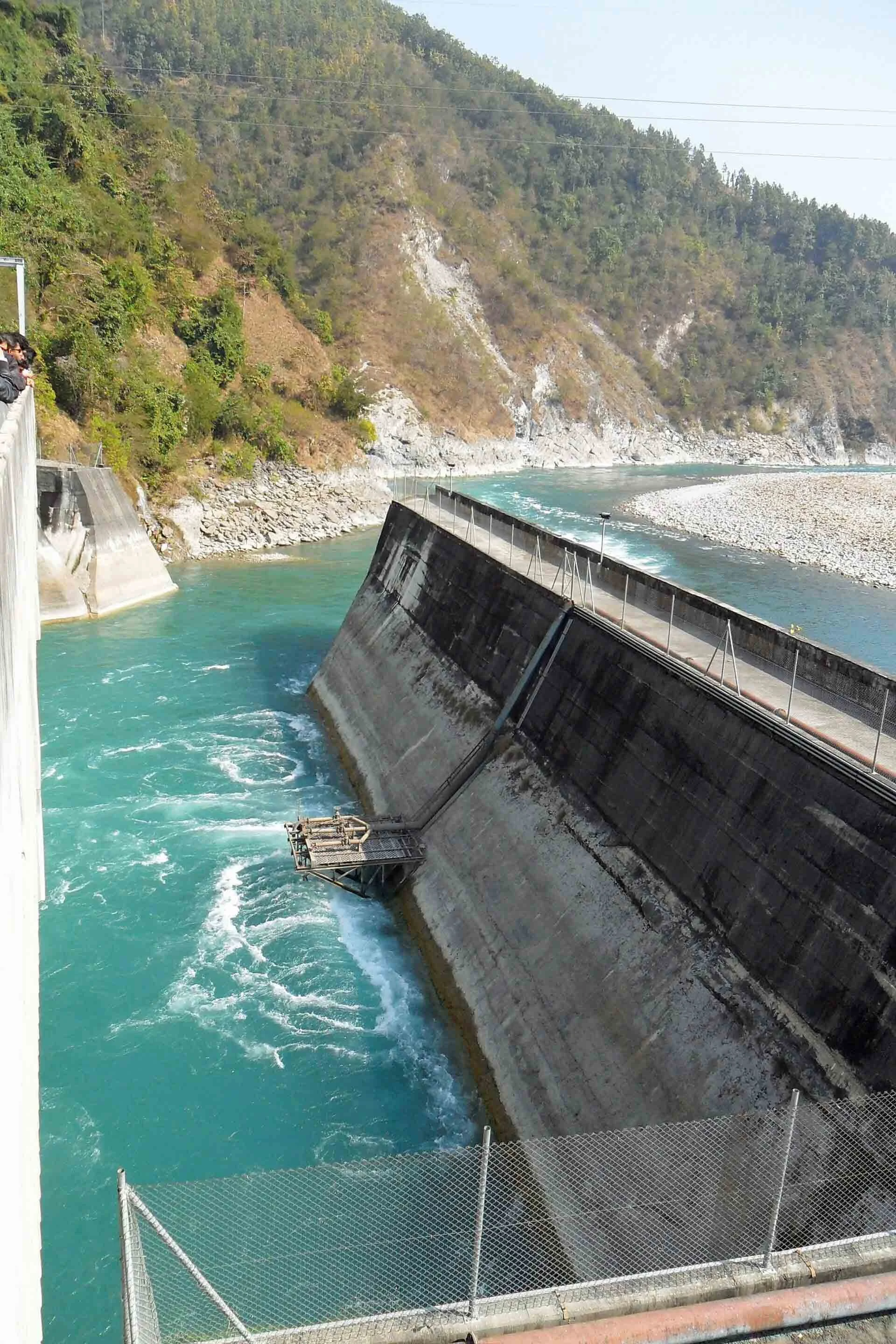
Middle Marsyangdi Hydroelectric Dam | Source: Wikipedia