

Read the full article here.
For South Africa, expanded regional transmission means the lowering of long-term electricity costs, strengthening competition, improving energy security and reducing fiscal pressure by limiting the need for costly, purely domestic capacity being added.
Applying a regional lens will also improve the investment case for new generation and transmission capacity in South Africa, as use of system charges can be levied on regional market participants who use the South African network for cross-border electricity flows. But without adequate interconnection, regional trade remains constrained, and system costs remain higher than necessary.
Cross-border trade essentially delivers large system-wide savings through economies of scale and the optimal use of resources.
Importantly, during South Africa’s G20 Presidency in 2025, regional integration and cross-border energy flows were among the important focus areas of the "Solidarity, Equality and Sustainability" agenda, aimed at addressing Africa's energy poverty and strengthening its energy infrastructure.
Given the regional benefits cross-border power flows achieve, further steps are being taken to grow and strengthen the regional electricity market within the SAPP with the launch of the World Bank-approved RETRADE SAPP project in November 2025.
The project provides $12-million in technical assistance to increase cross-border trading, improve market liquidity, crowd in private capital for transmission, and accelerate renewable energy integration across SAPP’s 12 member countries.
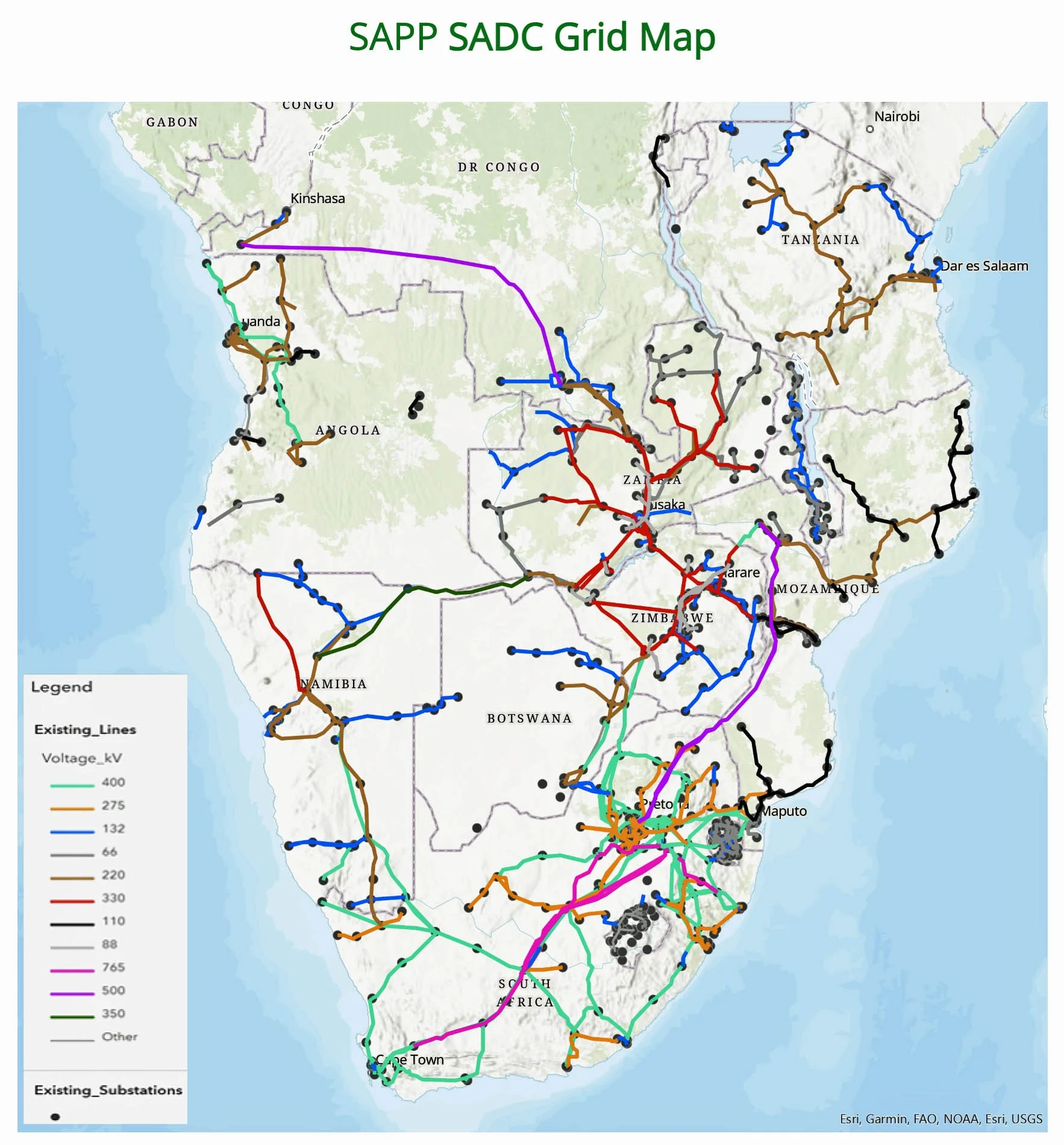
Source: South African Power Pool (SAPP)