

Read the full article here.
Africa’s electricity systems are entering a period in which the political risks attached to cross-border power trades are set to intensify over the near term, according to new research published in Nature Communications. The study, which examines the exposure of power trading arrangements across the African continent to political risk, arrives at a moment when regional electricity markets are expanding faster than the governance structures designed to protect them. As countries increasingly rely on their neighbors for reliable and affordable electricity, the researchers find that the vulnerabilities embedded in these arrangements are growing rather than receding.
Cross-border electricity trade has long been promoted as one of the most practical pathways toward universal energy access in Africa. Regional power pools, including the Southern African Power Pool, the West African Power Pool, the Eastern Africa Power Pool and the Central African Power Pool, were established to allow member countries to exchange electricity, smooth out seasonal imbalances and exploit complementary generation resources.
The new analysis suggests that this interdependence carries a political dimension that has been underappreciated in energy planning. When electricity flows across national borders, the security of supply depends not only on physical infrastructure and hydrological conditions but also on the stability of diplomatic relations, the credibility of contractual commitments and the domestic political circumstances of the trading partners. A transmission interconnector is only as reliable as the political willingness of both ends to keep it operating. The researchers characterize this as political risk: the possibility that political events, decisions or instability within or between countries will disrupt the expected benefits of power trades.
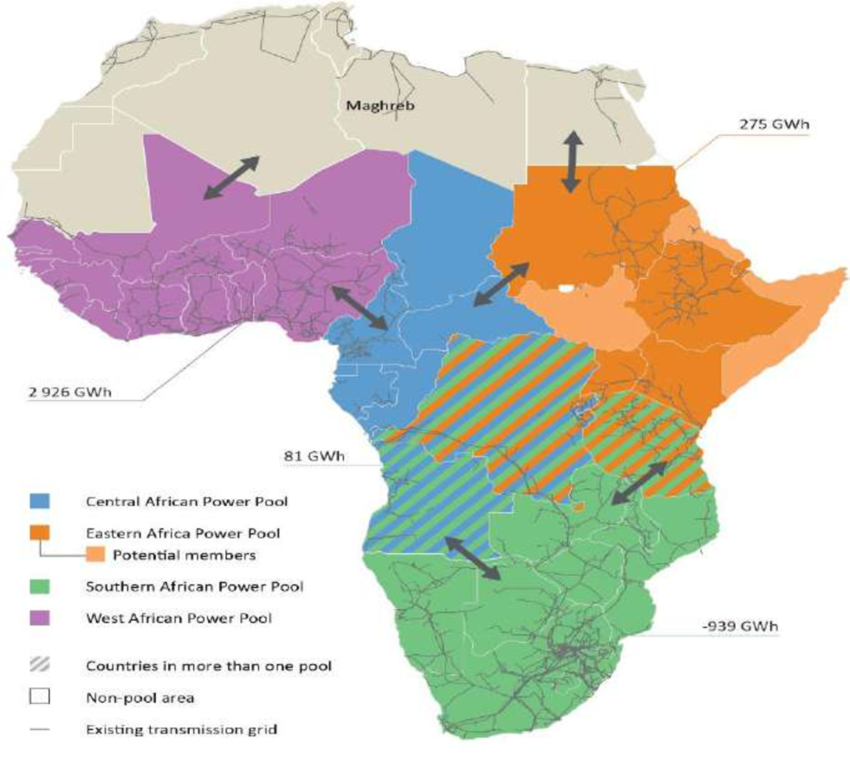
Source: Ferdi, L & Byiers, Bruce & De Melo, Jaime & Medinilla, Alfonso & Cazals, Antoine. (2021). African regional integration - a problem-driven approach to delivering regional public goods.