

The green great game: Crafting an EU-Central Asia energy alliance
Read the entire paper here.
Central Asia, a region of over 80 million people, rich in resources and serving as a strategic land bridge between major global markets, is increasingly seeking diverse partnerships. Historically influenced by Russia and currently heavily dependent on China, its countries are eager to strengthen their ties with Europe.
In April 2025, the inaugural Central Asia-EU summit in Samarkand marked a significant milestone, elevating relations to a strategic partnership. The EU announced €12bn in investments as part of Global Gateway, fuelling aspirations for cooperation in energy, infrastructure and trade. Clean energy presents the most promising area for EU collaboration. The region needs technology to tap into the full potential of its rich reserves of fossil fuels and rare earth minerals, resources the EU needs.
Furthermore, Central Asia’s strategic location is crucial for the Middle Corridor, also known as the Trans-Caspian International Transport Route, an integrated transportation route connecting China and Europe that circumvents Russia. The Middle Corridor is of particular interest to Kazakhstan and Uzbekistan, the region’s largest economies and the best positioned to cooperate with Europe.
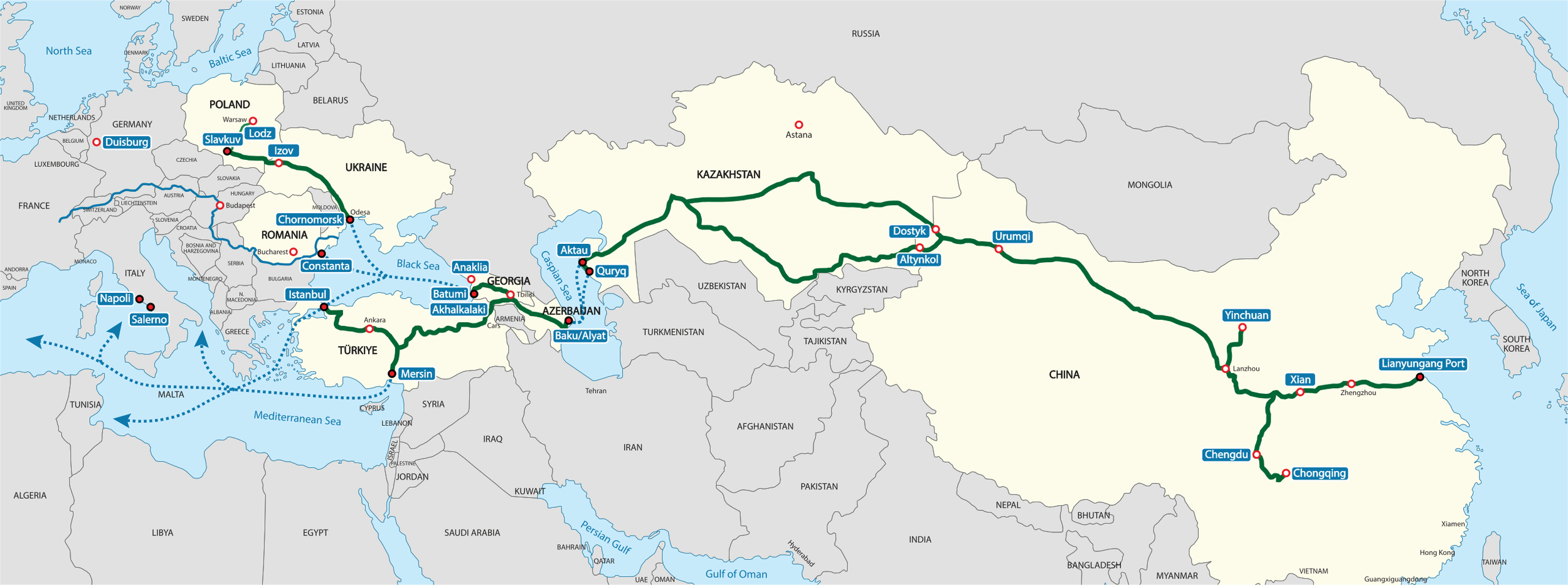
Trans-Caspian International Transport Route. Source: Wikipedia.
