

Read the full article here.
The clean energy revolution has a hidden vulnerability: the software running it answers to someone else.
On April 1, Vietnam did something no government had done before. When it licensed Elon Musk's Starlink satellite network to operate in the country, Hanoi buried a condition in the fine print: all data traffic must route through four domestically controlled gateway stations on Vietnamese soil. No foreign server would touch Vietnamese data without Vietnamese eyes on it first. The announcement drew a few tech headlines and quickly faded.
It shouldn't have. Because Vietnam just wrote the playbook for the most consequential fight in the global energy transition—and almost no one noticed.
The green energy revolution is not simply a story about solar panels and wind turbines displacing coal and gas. It is increasingly a story about who controls the software, algorithms, and data infrastructure that power those systems. And for much of the world, the answer is: someone else.
"Europe has effectively surrendered remote control of a vast portion of its electricity infrastructure," warned Christoph Podewils, secretary general of the European Solar Manufacturing Council. He was not speaking in hypotheticals.
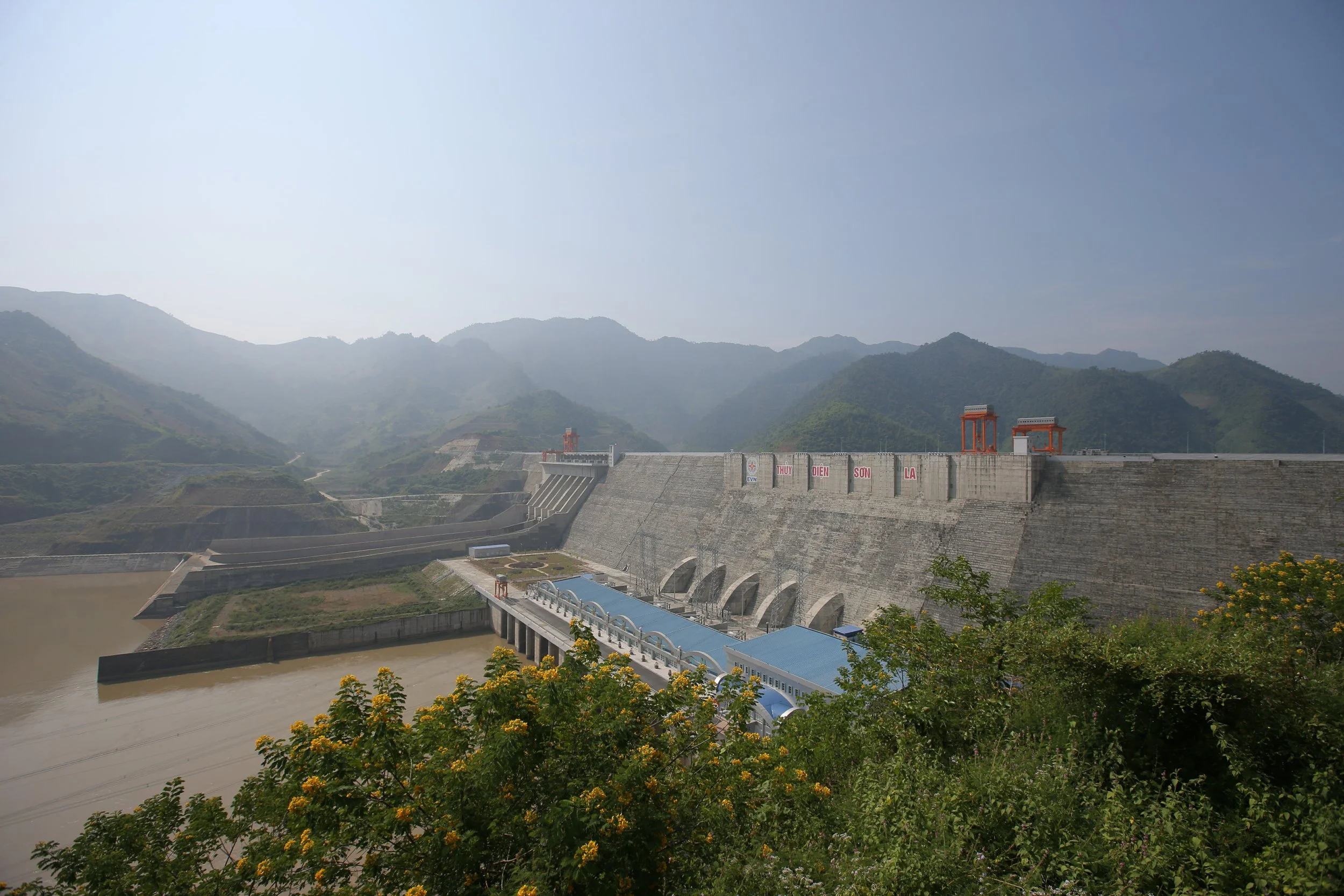
Sơn La Dam in northern Vietnam. Source: Wikipedia