

The North Sea: Europe’s Green Power House
Read the full article here.
Wind energy from the North Sea plays a key role in building a resilient energy system. It will make us more independent of fossil fuel imports and reinforce the security of supply through domestic generation.
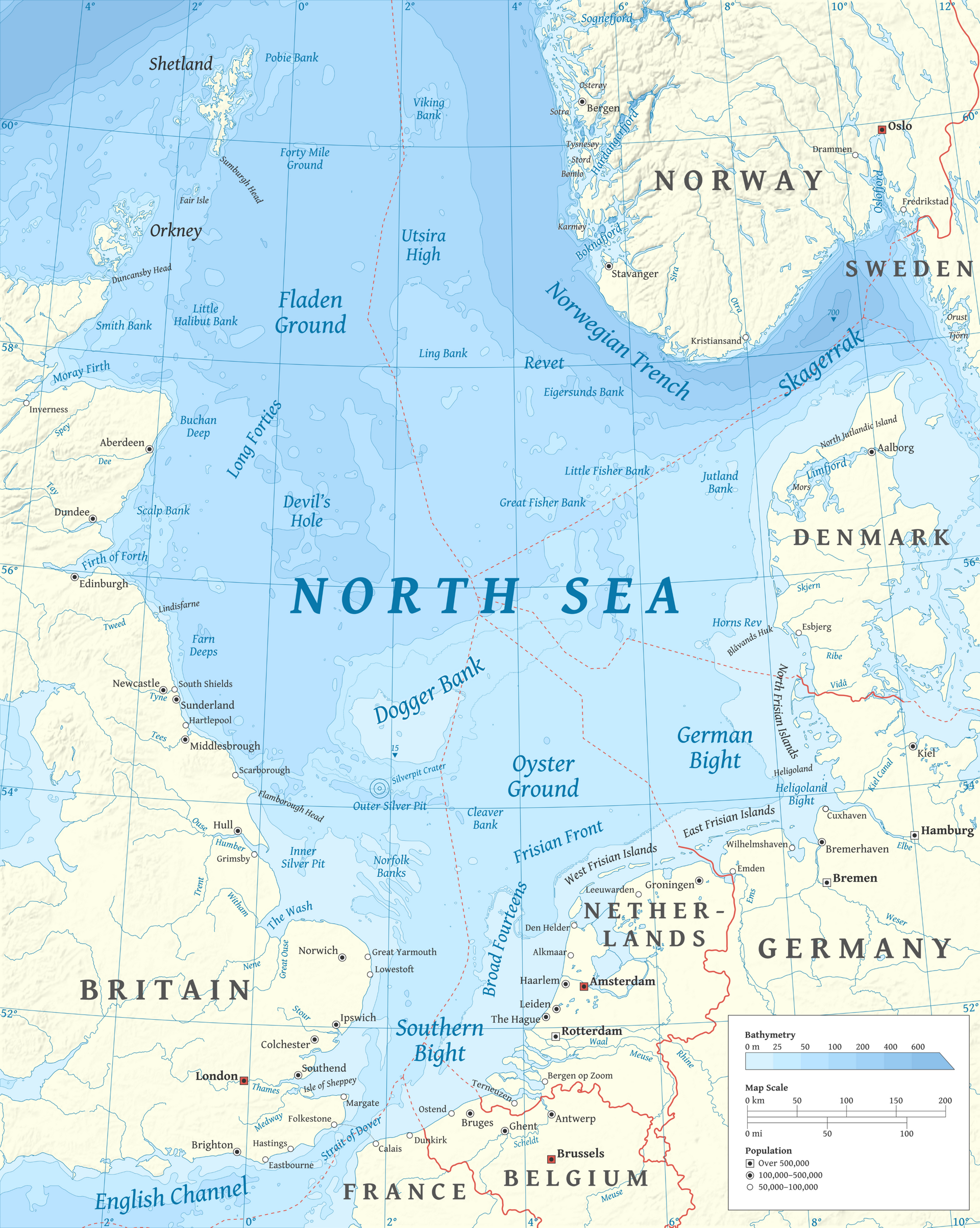
The North Sea is emerging as Europe’s most efficient power house. Thanks to consistent wind conditions, offshore wind farms reliably generate significantly more electricity than onshore facilities. In this way, offshore wind energy makes a decisive contribution to meeting rising electricity demand, strengthening energy security and resilience, and achieving a carbon-free energy system.
At the European level, ambitious targets have been set for the expansion of the offshore grid. By 2030, 120 gigawatts of offshore wind capacity are to be installed in Europe, and as much as 300 gigawatts by 2050. Germany plays a key role in this: 30 gigawatts of offshore capacity are planned by 2030, and expansion is set to rise to 70 gigawatts by 2045.
This makes offshore wind energy a central pillar of the energy transition and long-term security of supply.
Cross-border offshore power connections – known as interconnectors – are crucial for the efficient use of renewable energy and for linking electricity markets.
Source: Wikipedia