

The significance of 2025 Central Asian Summits for the Energy Grid Development in 2026
Read the full article here.
After the fall of the Soviet Union, the republics of Central Asia appeared to have largely lost the shared energy grid system. Certain regions like Uzbekistan, Kyrgyzstan, and the south of Kazakhstan have retained the interconnected energy grid, with Tajikistan joining later in 2024. Despite this, countries still tend to develop their national energy strategies without considering the benefits of joint planning, such as granting the region more low-carbon energy sources, and improving security of the system, allowing to redirect energy to places currently experiencing shortages from places with a surplus in energy.
Amidst global instability, the interest of international powers is now drawn to Central Asia’s vast rare earth and metal resources, as they try to diversify their supply chains. In return, they pledge support in strengthening the democratic institutions in the region and investing in crucial fields, such as energy grids.
Thus, 2025 marked many firsts in diplomatic efforts to strengthen old relationships and form new ones. For example, it was the first time Central Asian leaders had visited Washington, D.C. within the framework of the “C5+1” summit, where Central Asian states had agreed to further strengthen their partnership,
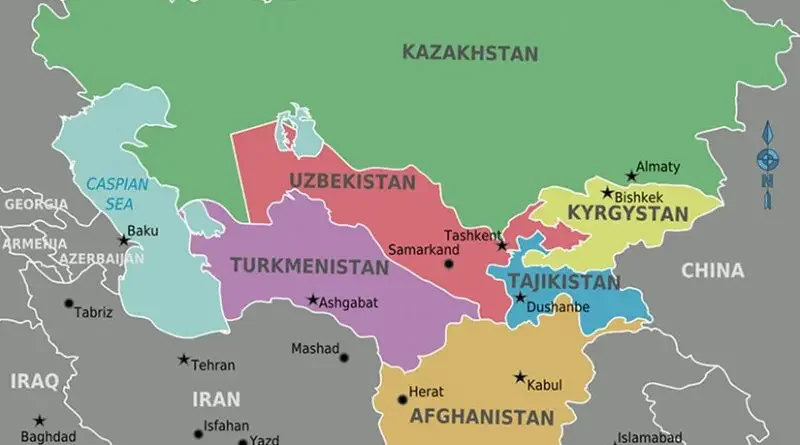
Central Asia by Cacahuate. Source: Wikipedia Commons.