

Read the full article here.
Decarbonisation of the European Union’s electricity sector is fundamental to EU efforts to reduce greenhouse gas emissions, foreign dependencies and energy costs. Since 1990, the carbon intensity of electricity generated in the EU has more than halved and EU countries continue the rapid deployment of renewable energy sources. Clean electricity is projected to replace fossil fuels in industry, transport and buildings, and to provide most of the ‘useful’ energy to the EU’s economy by the 2040s. To meet these targets, the electricity sector requires massive additional generation and storage capacity, and network and demand-side investments, while some fossil-fuel infrastructure needs to be carefully decommissioned.
Three steps should be taken to improve the efficiency of the European Union’s energy system: 1) enhance transparency through open data and modelling, 2) better integrate network planning with policy targets and across borders, and 3) strengthen alignment of national policies and plans. As the EU transitions towards greater reliance on domestically produced electricity, the economic stakes of fragmentation rise. These three elements are essential to address the weak coordination and incoherence of national system-development plans and policies.
By coordinating policies and infrastructure, the EU can ensure competitiveness and resilience, while transitioning to a decarbonised economy.
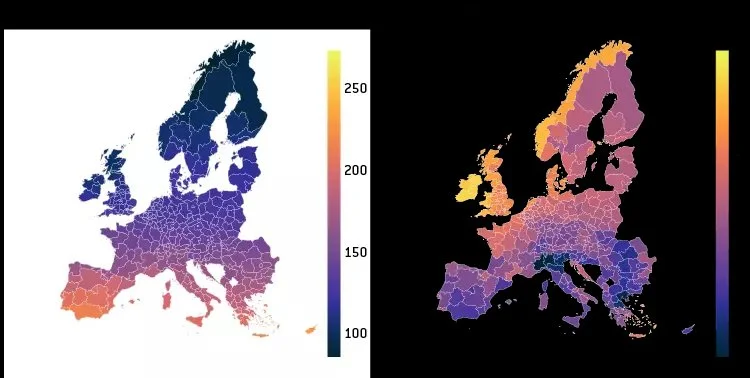
Source: Bruegel based on Copernicus Climate Change Service (2024) and ENTSO-E (2026)