

Brazil-Bolivia Power Corridor Ignites Grid Connectivity, Advancing Regional Energy Hub Ambitions
Read the full article here.
The Brazil-Bolivia energy transmission project has rapidly become a focal point for investors, driving renewed interest in South America's infrastructure landscape. This initiative stands out as a multi-billion dollar solution to a pressing regional challenge, attracting significant attention due to its potential to reshape power distribution. Far from being just another transmission line, it represents Brazil's ambitious strategy to unify South American power networks—a move that is capturing the market's imagination.
The urgency behind this project stems from persistent congestion on key Brazilian transmission routes in Mato Grosso do Sul, such as the 138 kV Campo Grande 2 – Mimoso 2 – Jupiá line. These bottlenecks are limiting the flow of electricity from new generation facilities, underscoring the need for expanded infrastructure. To address this, Brazil's energy planning agency has outlined investments totaling R$ 7.06 billion for new transmission works, with R$ 2.79 billion earmarked specifically for the international link to Bolivia, highlighting its strategic significance.
This project is part of a broader movement toward regional energy integration. Brazil is actively strengthening connections with Argentina, Uruguay, Paraguay, and Venezuela, and the Bolivia link is the next major milestone. Preliminary studies for the new transmission system have already been released, and both countries signed a memorandum of understanding in 2024 to facilitate cross-border connectivity. The adoption of advanced VSC (Voltage Source Converter) technology addresses the technical challenge of linking grids operating at different frequencies—60 Hz in Brazil and 50 Hz in Bolivia—demonstrating the project's innovative approach.
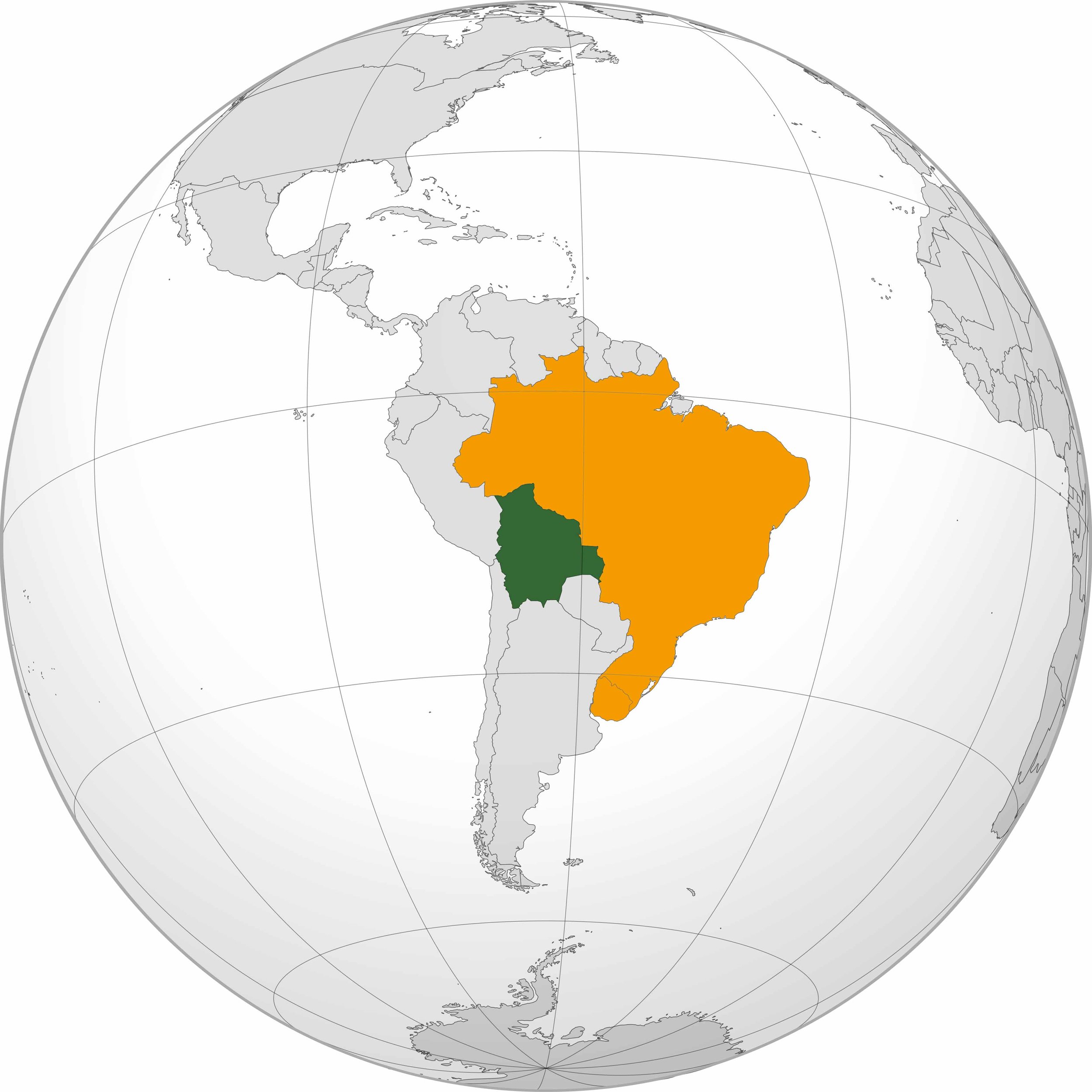
Source: Wikipedia
