

Science Talk: Decarbonisation no longer a trade-off but a security, economic imperative for ASEAN
Read the full article here.
For years, decarbonisation was framed as a cost: a moral imperative that required sacrifice today for safety tomorrow. That framing was always incomplete, but it is now simply wrong.
The dramatic collapse in the cost of solar, wind, batteries and associated technologies means that the most secure energy system and the most affordable energy system are, increasingly, the same system.
China understood early that a clean energy future is both an economic opportunity and an imperative for energy security. It led one of the most ambitious domestic energy security strategies in history, built on clean energy investment at an unrivalled scale and speed.
Its energy self-sufficiency now stands at 84.4 per cent, and its dependence on fossil fuels continues to decrease as a result of accelerated electric vehicle adoption, rapid electrification and the largest high-speed rail network in the world.
China’s investment in clean energy technology has not only accelerated its own energy transition but has also driven down costs so dramatically that renewables are now the most cost-effective way to meet virtually all new electricity demand.
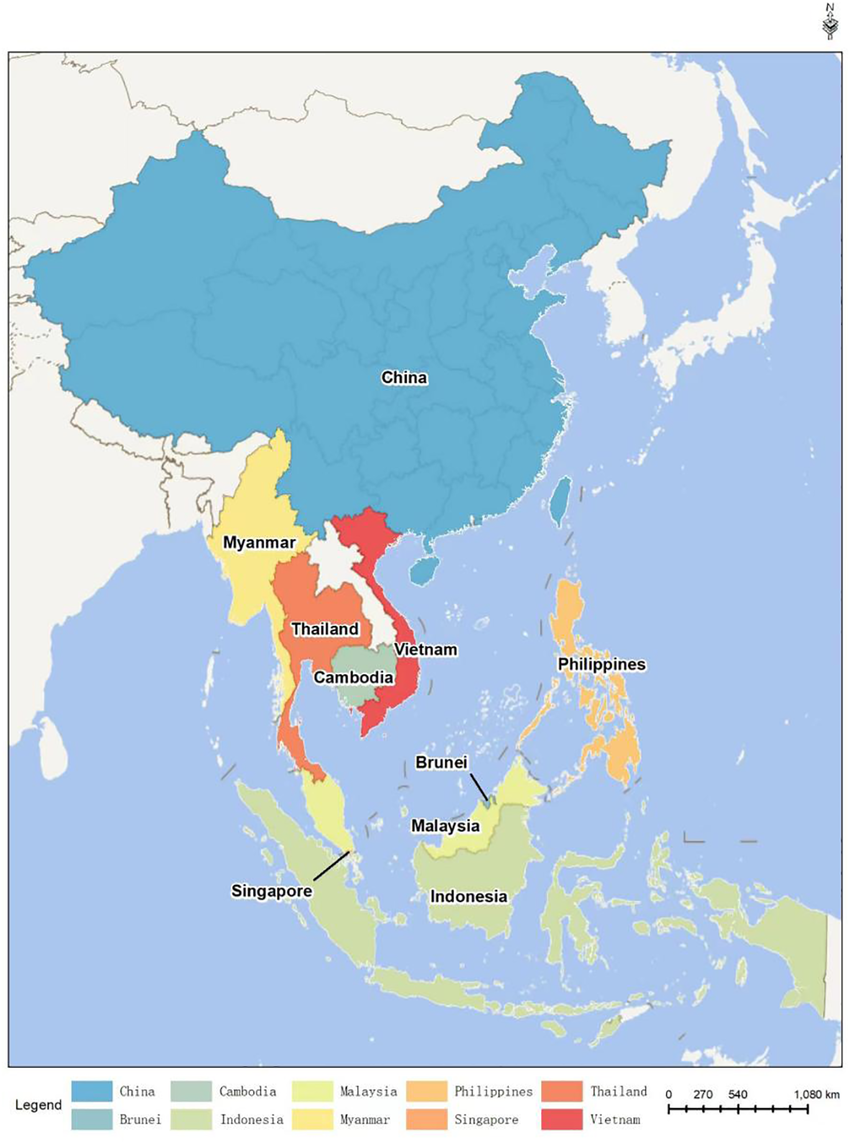
Source: Chen, Fenggui & Cui, Zhiyi & Wu, Jianwei & Jiang, Yuhuan & Cai, Feng. (2024). Protection pattern and driving mechanism of typical marine ecosystems: a case study of China-ASEAN countries. Frontiers in Marine Science. 11. 10.3389/fmars.2024.1378188.