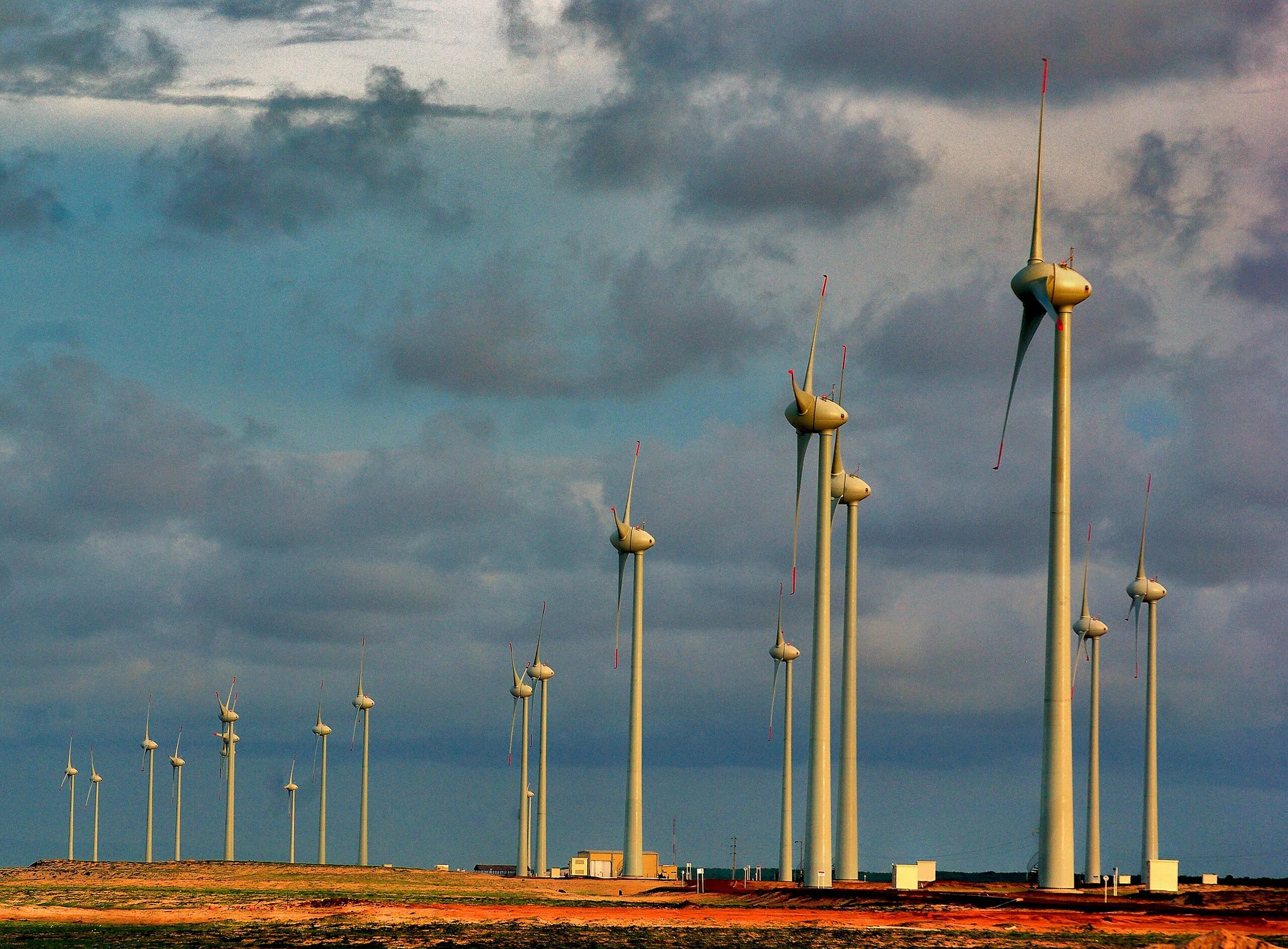
Can Brazil’s grid keep up with its clean energy boom?
Read the full article here.
Following a wind and solar power boom over the past decade, Brazil’s green energy build-out has hit an obstacle as the network of cables that transport electricity fails to keep pace.
The resulting difficulties balancing supply and demand mismatches is forcing temporary suspensions of renewables plants in the country at an alarming rate, according to sector representatives, who say the issue threatens the construction of new projects.
Large-scale hydroelectric dams have for decades provided the backbone of power supply in Latin America’s biggest economy, which has one of the world’s cleanest electricity grids.
But wind and solar are an increasingly important part of the mix, having rocketed from just 4 per cent (or 8 gigawatts) of Brazil’s total generation capacity in 2015 to two-fifths (or 99GW) this year, according to data from consultancy Aurora Energy Research. It calculates that $78bn was invested over that period.
The intermittent nature of solar and wind energy means peaks and troughs of output. So to guarantee the electricity system’s stability, when there is excess power that can’t be absorbed, grid operators stop certain facilities from generating — known in industry parlance as curtailment.