

Delhi-Dhaka need reset, must let go of political baggage
Read the full article here.
The so-called sonali adhyay, or golden phase of India-Bangladesh relations after 1971, appears to have receded. Trade integration, cross-border connectivity, energy interdependence, and the political economy of regional cooperation now face multiple constraints. Although Bangladesh continues to be one of India’s principal trade partners in South Asia, the trade relationship stands at a critical juncture, caught between the possibility of renewed cooperation and the risk of reversal.
While imports from India have declined, imports from China and Malaysia have reportedly increased in the post-Sheikh Hasina period. Energy cooperation illustrates the growing material interdependence between the two economies. India’s electricity exports to Bangladesh, the Maitree Super Thermal Power Plant, and the India-Bangladesh Friendship Pipeline have expanded cross-border energy flows and created a more institutionalised framework for infrastructure cooperation.
Future collaboration may increasingly depend on renewable energy, grid modernisation, storage technologies, and market-based cross-border power trading. In this sense, energy cooperation is not simply a sectoral issue but a mechanism for building regional public goods. Trade diversion away from India is largely driven by the growing use of non-tariff measures (NTMs), including sudden land-port restrictions, the withdrawal of transshipment privileges, anti-dumping duties, and stringent testing or certification requirements. These regulatory barriers raise overall trade costs and disrupt supply chains, particularly for garments, food products, and production materials.
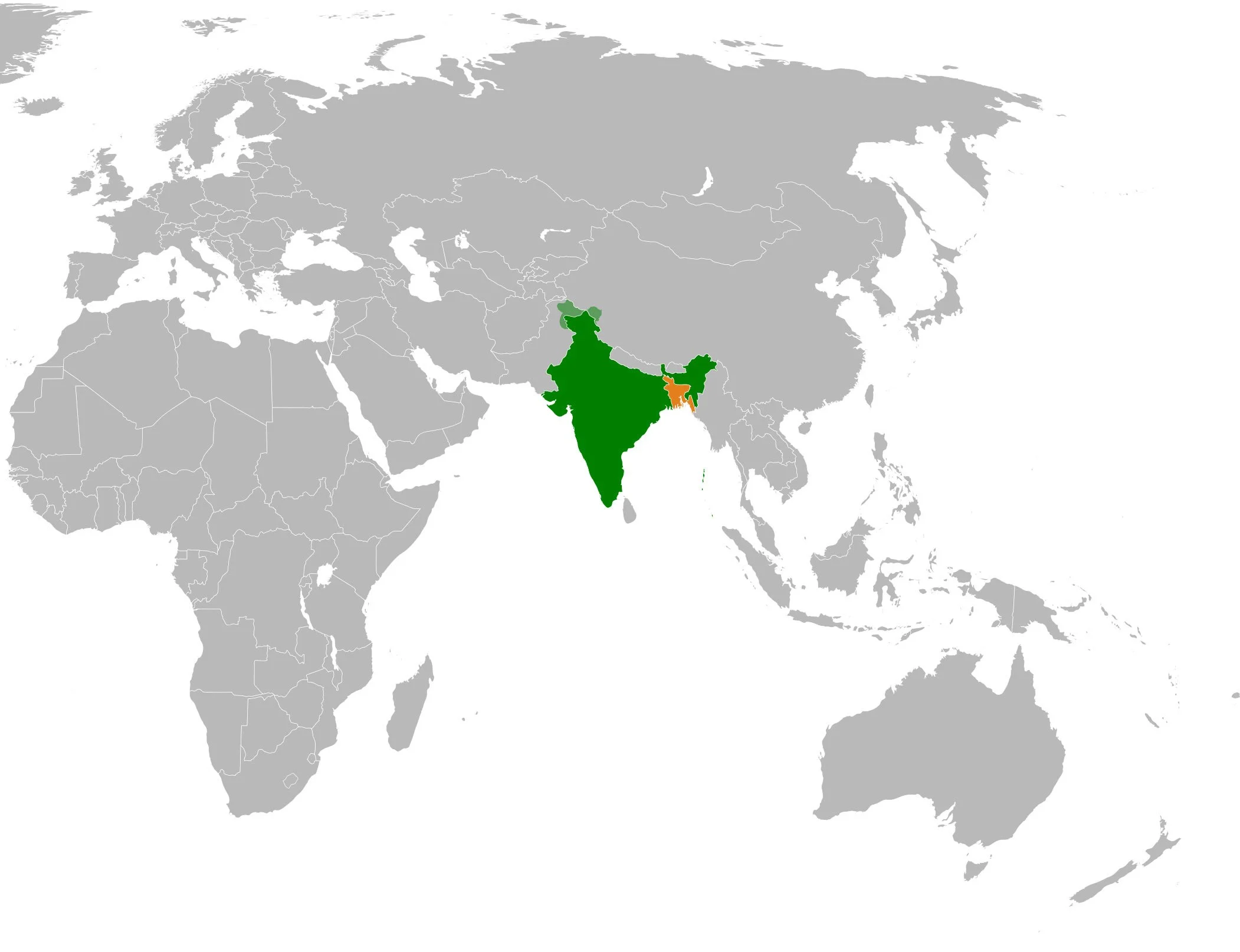
Source: Wikipedia