

Europe must unite to fix renewables versus grid imbalance
Read the full article here.
Europe has the ambition, expertise and technology needed to advance the energy transition. What is now urgently required is stronger alignment around a shared vision for how the future energy system must operate. Decisions continue to be made within national, sectoral, regulatory and organisational boundaries, even as electricity flows, investment, risk and infrastructure needs increasingly extend across them.
This fragmentation is visible in planning, regulation, market design, and permitting processes. The consequences are already clear. Renewable generation is being developed faster than the networks needed to connect, transport, and use it. Between 2015 and 2022, European wind and solar capacity grew by 100%, while grid investment increased by only around 13%. If this imbalance continues, Europe risks constraining the clean-energy capacity it is working so hard to build.
Grid infrastructure can take seven to ten years or longer to deliver. Waiting for certainty only increases delays, congestion, costs, and lost industrial opportunities. Europe must move now from fragmented planning to coordinated execution, based on common scenarios, interoperable standards, aligned investment priorities and shared accountability.
Europe must replace fragmented commitments with coordinated action. That starts with a shared vision for a Target 2050 European Grid, supported by a central planning scenario that system operators, regulators, policymakers, technology providers, investors and energy users can work toward.
That vision must be translated into clear investment priorities, milestones, market signals, grid-code requirements and accountability.
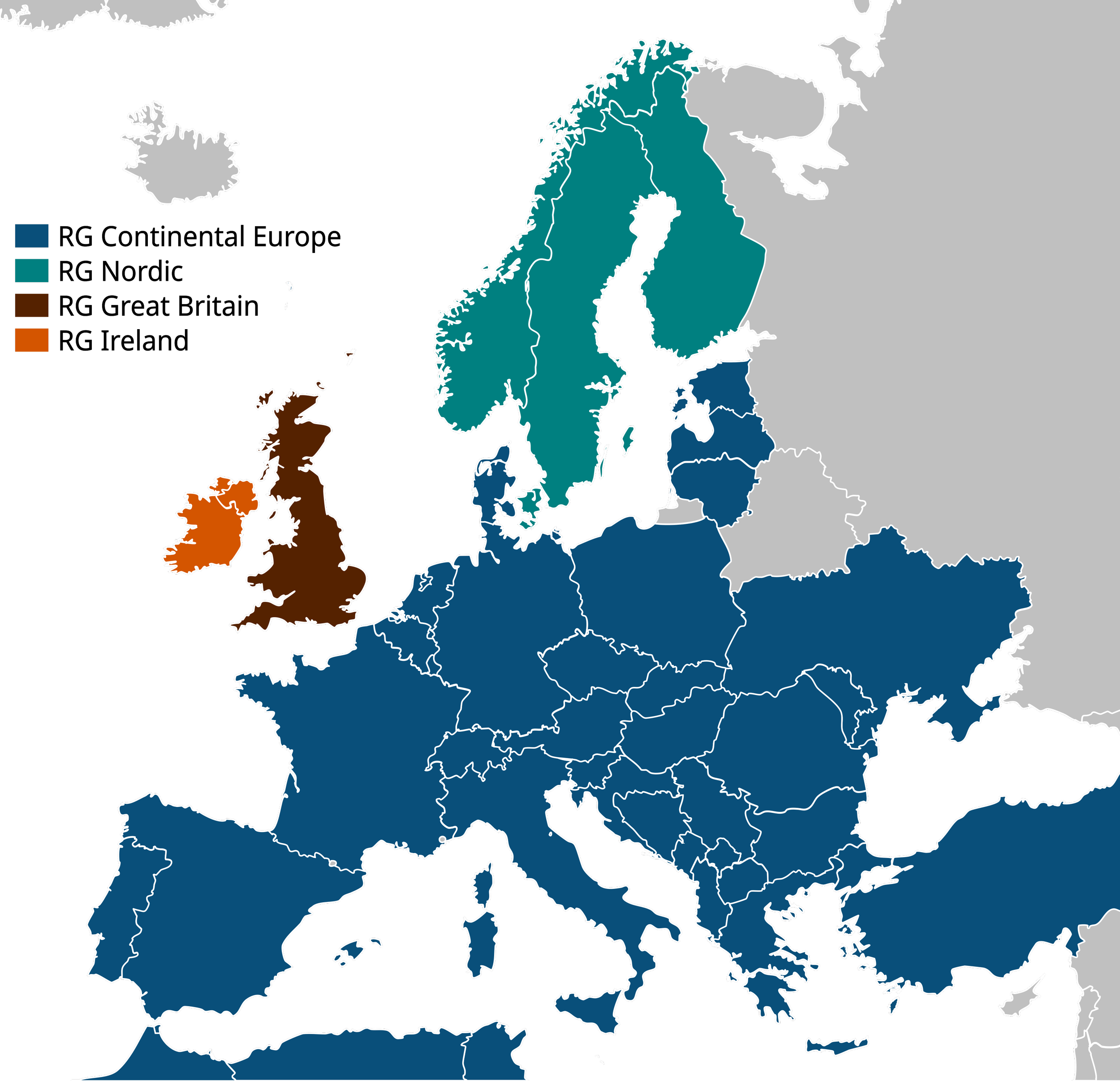
Map of European transmission system operators organizations. Source: Wikipedia