

Read the full article here.
An unstable global energy landscape is a wake-up call for Southeast Asia’s energy security and transition efforts. Integrating ecological, health, and security concerns into solutions centred on the ASEAN Power Grid, as well as the sustainable management of critical minerals, can build resilience while safeguarding the planetary health the region seeks to protect.
Conflicts in the Middle East have exposed vulnerabilities linked to dependence on imported fossil fuels. This severe energy crisis reinforces the case for accelerating Southeast Asia’s energy transition. Amid a fracturing global landscape, striving for regional resilience is crucial to reducing reliance on external resources and adapting to a decarbonised future.
Yet enhanced commitments to the energy transition also require critical engagement with its ends and means – integrating both technical solutions and the systems thinking of a Planetary Health perspective. The transition calls for the convergence of ecological stability, public health, and human security. This makes the region’s aspirations for energy security inextricably linked to the preservation of human and environmental well-being.
Ultimately, the region’s success in managing ongoing and future energy crises will be measured, not only by its resilience to external shocks, but also by the preservation of its planetary health. ASEAN has the potential to pioneer a model of resilience that safeguards both its populations and ecological foundations. This requires charting a deliberate course where energy security and planetary health goals should be considered in an interconnected manner.
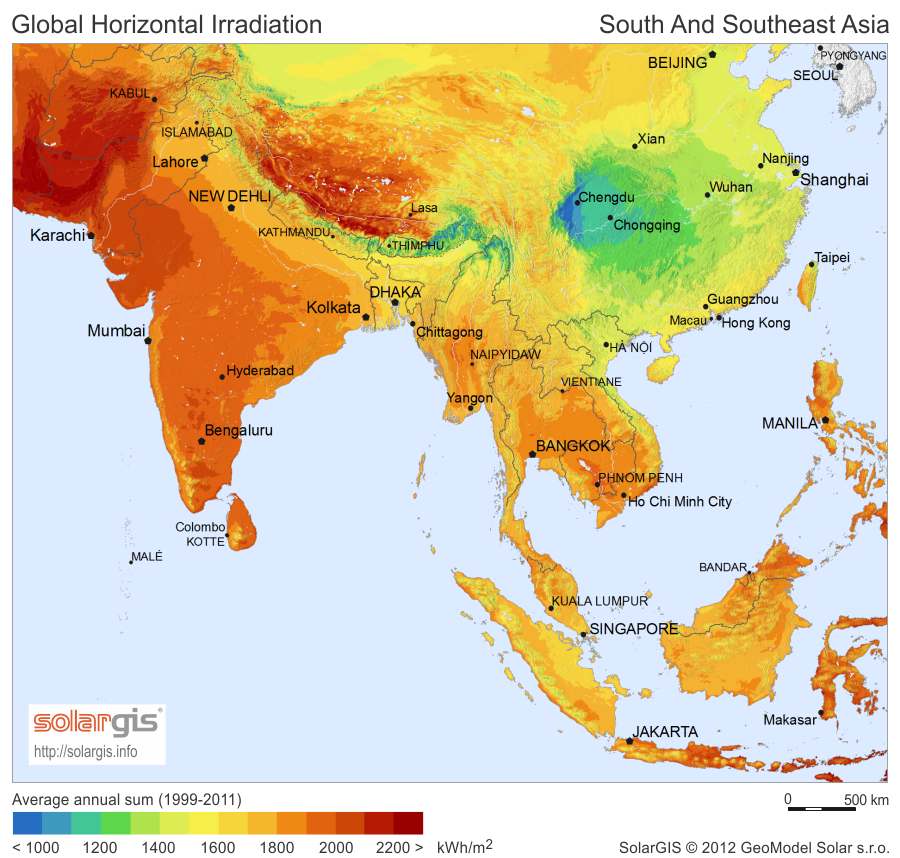
Source: Solargis