

India and Europe: Bridging Continents Through IMEC
Read the full article here.
In a world adrift, marked by conflict and fragmentation, India and Europe represent a rare example of intensifying cooperation and geoeconomic convergence. As two of the largest economies and democracies in the world, the European Union (EU) and India will need to craft new, interoperable systems and instruments for economic interdependence to advance their convergence.
The successful implementation of the India–Middle East–Europe Economic Corridor (IMEC) as an Indo-Atlantic connectivity partnership between India and Europe will require far more than investments in ports, railways, and logistics infrastructure. It will depend equally on policy coordination, regulatory interoperability, digital integration, institutional governance, financial structuring, and sustained political engagement across all participating geographies and beyond, including adjacent regions: from Southeast Asia to the North Atlantic and from Central Asia to North and East Africa.
IMEC emerged amid intensifying geopolitical fragmentation and growing concern about the resilience of global trade, energy, and digital networks. Since its announcement in 2023, the war in Ukraine, conflict in Gaza, disruptions in the Red Sea, and the Strait of Hormuz crisis have exposed the risks created by concentrated trade routes and strategic chokepoints. In parallel, India and Europe have deepened economic and strategic cooperation through the conclusion of negotiations on the India–EU Free Trade Agreement (FTA) and a broader agenda focused on supply-chain resilience, connectivity, and economic security.
The corridor could support renewable-energy trade, electricity interconnections, green-hydrogen exports, and wider climate cooperation between Europe, the Gulf, and South Asia. Several contributions emphasise that energy connectivity should be treated as a core pillar of IMEC rather than an ancillary component. Climate resilience, water cooperation, and cross-border energy systems increasingly form part of the corridor’s long-term value proposition.
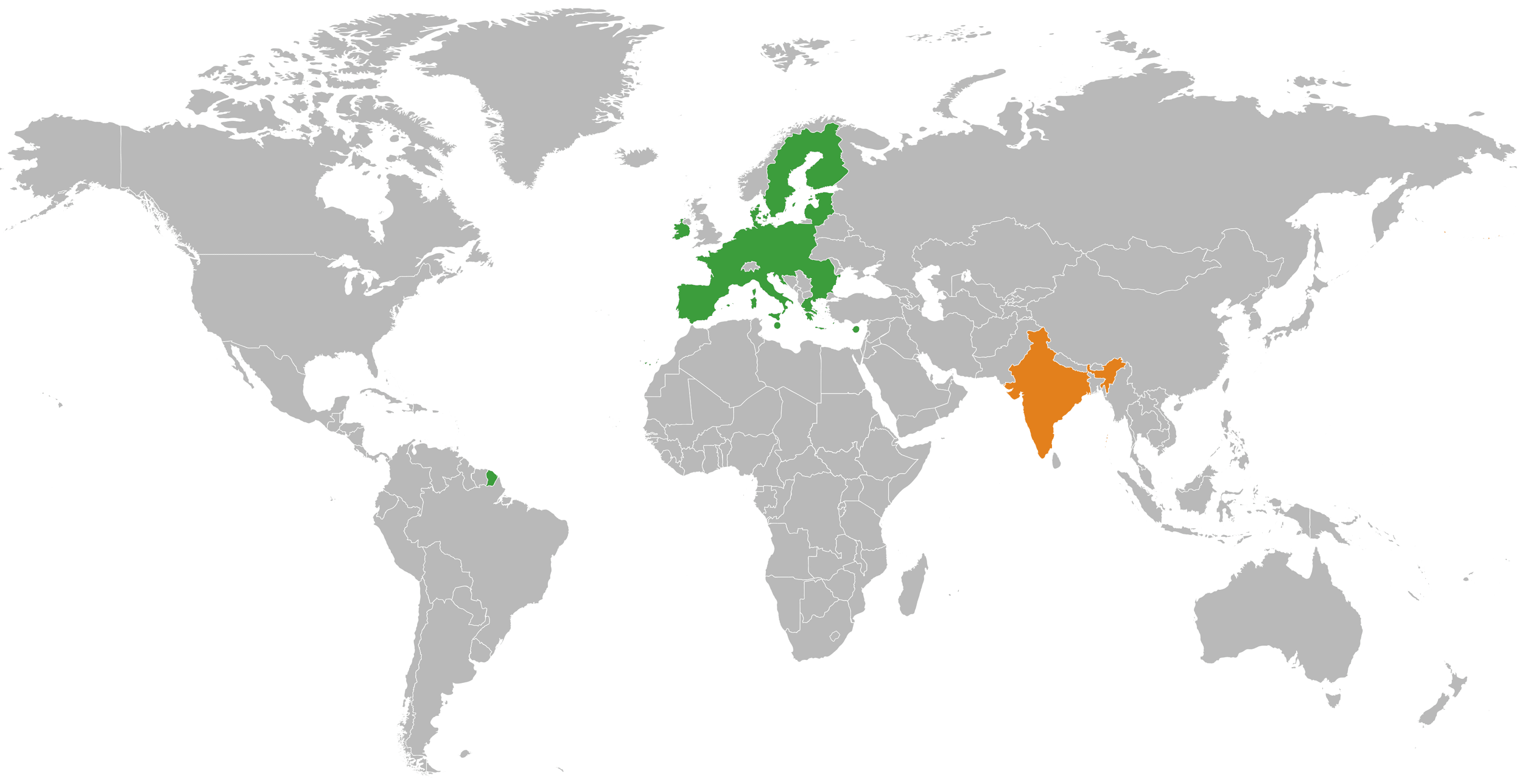
Source: Wikipedia