

Read the full article here.
Three Massachusetts utilities are suing Canadian energy giant Hydro-Québec after it failed to deliver promised hydropower for several days during a cold snap this winter. Hydro-Québec, in turn, is suing the utilities for withholding payment for power that was delivered.
The dispute is the latest in a string of challenges surrounding hydropower imports into New England. It centers on 12 days in January and February when temperatures plunged well below zero Fahrenheit in Québec. Electricity demand surged in the region, leading the Canadian company to largely stop exporting power along the New England Clean Energy Connect (NECEC) transmission line, which began operation on Jan. 16.
Eversource Energy, National Grid, and Unitil — the three utilities that contracted to buy the power imported on the new line — claim they are owed $40 million in compensation for the lapse. When the electricity ceased, the utilities had to fill in the gap with dirtier, more expensive power and buy renewable energy credits to replace those attached to the hydropower in order to meet state requirements. Hydro-Québec, they say in their lawsuit, should have been prepared for the situation: That Canada might get very cold in the winter was “entirely foreseeable.”
Hydro-Québec, however, argues that the contract allows it to make up its obligations at a later date, as the province’s grid operator — not Hydro-Québec itself — made the decision to stop sending power south. The extreme cold led to unprecedented demand on the grid, and thus the need to divert power away from New England was beyond the company’s control, Hydro-Québec contends. It would owe compensation, it claims, only if it had made a voluntary choice to stop the exports.
These legal wranglings highlight persistent questions about how much new clean energy NECEC will contribute to the New England grid.
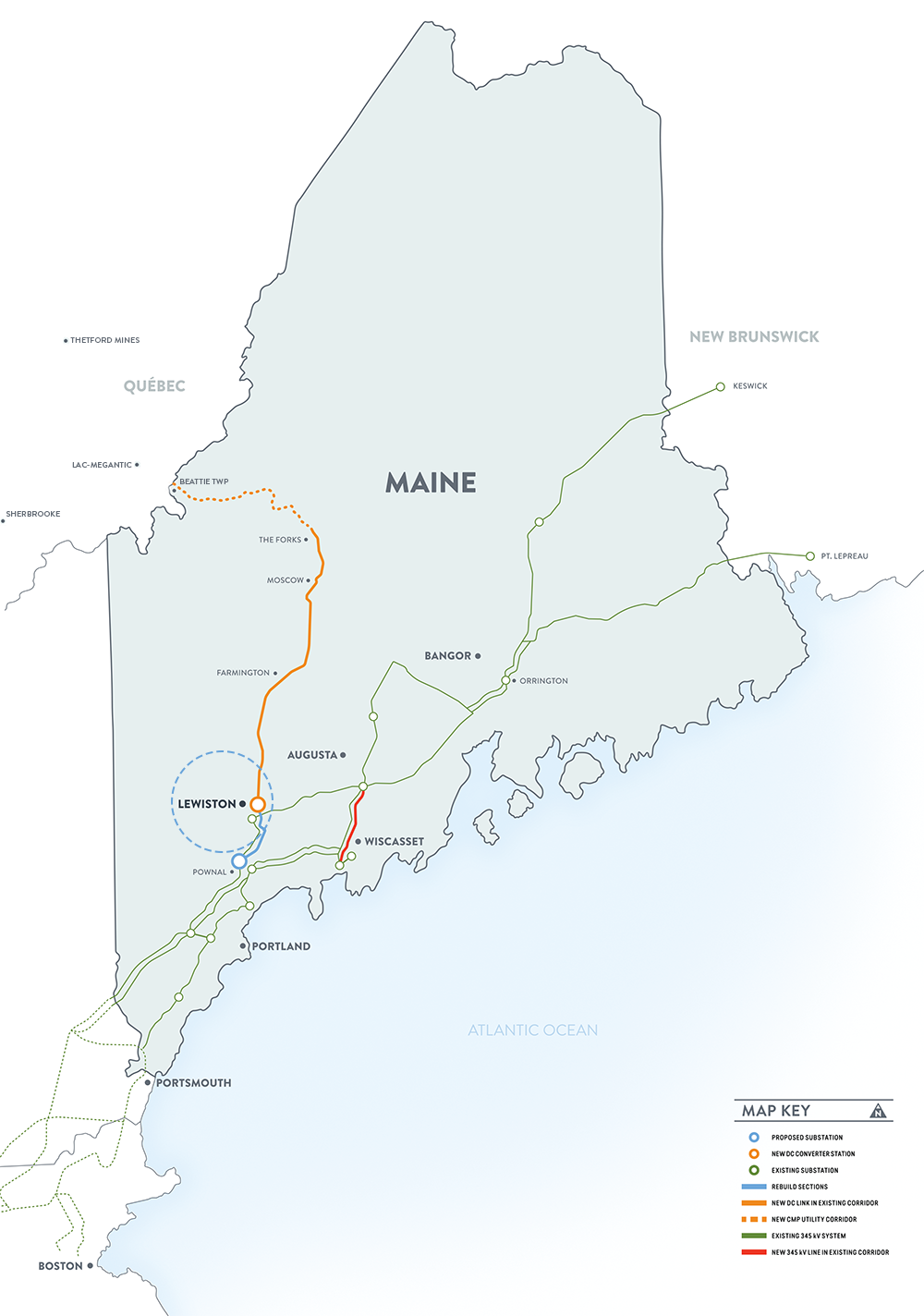
Source: New England Clean Energy Connect