

Subsea power cables as catalysts for the energy transition in Southeast Asia
Read the full article here.
Since 2022 the Asean Power Grid (APG) has entered a new era of unprecedented momentum. Originally proposed in 1997, the APG has three broad aims: develop physical interconnections between national grids, harmonise regulations and integrate electricity markets.
While progress has been slow and mired by challenges, in the last three years the APG has achieved two breakthroughs that have been out of reach for almost three decades: the shift from purely bilateral electricity trading to a multilateral framework, and consistent momentum towards the development of subsea power cable projects, which can transform energy trade in archipelagic Southeast Asia.
Currently, as many as six subsea power cable projects are at advanced stages of negotiation and planning. Strong and sustained political commitment from regional leaders has been critical to this progress.
The Joint Statement of the 43rd Asean Ministers on Energy Meeting (AMEM) held in Kuala Lumpur in 2025 described subsea cables as a ‘key building block’ of the APG and calls for accelerated progress on the completion of the Submarine Power Cable Development Framework, which will inform cooperation on four key priorities: legal and regulatory, technical, commercial and governance.
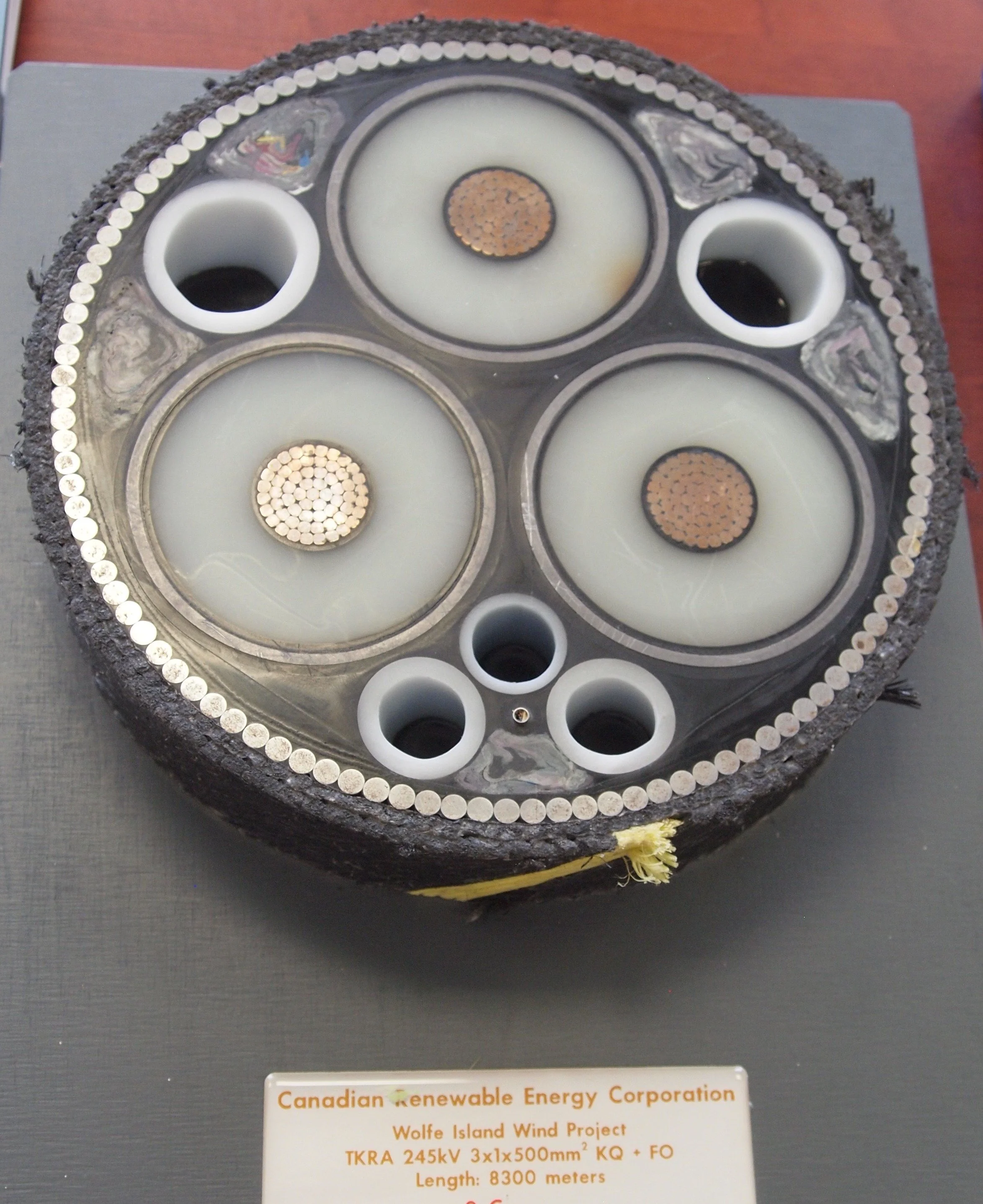
Cross section of the submarine power cable used in Wolfe Island Wind Farm. Source: Wikipedia
