

The Implementation Gap and Energy Transition Pathways in Africa
Read the full article here.
Africa’s energy transition challenge is not only a question of ambition, but also of implementation. It requires delivery systems that can expand electricity access, improve reliability and reduce emissions together. Botswana and Uganda use the language of energy transition, but their power systems reveal a widening implementation gap between commitments on paper and the institutional, procurement and grid conditions needed to deliver them. This matters because, according to data from the International Energy Agency (IEA), sub-Saharan Africa still had 451 million people without electricity in 2023.
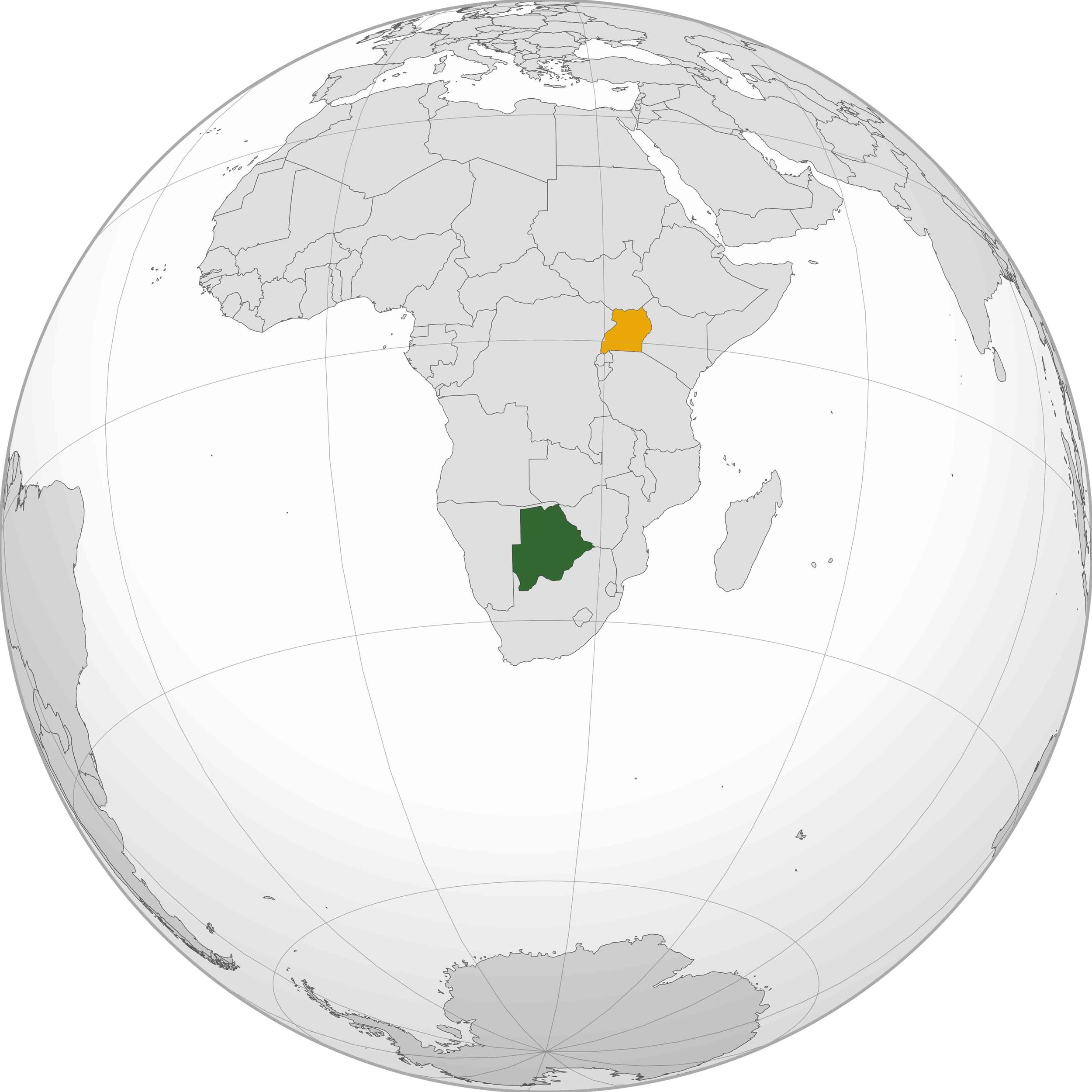
Botswana and Uganda sit at opposite ends of the energy transition spectrum. Botswana is a coal-dependent upper-middle-income power system trying to reconcile reliability, building homegrown generation capacity rather than depending on electricity imported from neighbouring countries (“domestic supply ambitions”), and low-carbon commitments. Uganda, by contrast, is largely renewable and hydropower-dominated, so its main challenge is not coal replacement but access, affordability, grid resilience and climate vulnerability.
This contrast makes the comparison analytically useful. Despite their different system structures, both countries face a shared governance problem. Policy ambition has moved faster than the delivery mechanisms needed to turn commitments into projects and system improvements. Financing arrangements, procurement processes, grid investment plans and institutional coordination mechanisms remain incomplete or inconsistent.
Source: Wikipedia